Shrimp Harvest Pump Evolution.
(In response to a discussion on shrimp harvest pumps on the Yahoo - Shrimp List October 21, 2012)
121021

Shrimp Harvest Pump Evolution.
(In response to a discussion on shrimp harvest pumps on the Yahoo - Shrimp List October 21, 2012)
121021
To the best of my knowledge, our aquaculture tech. development group at Sun Oil Inc. /Aquaprawns - was the first to adapt the use of open impeller food pumps (eggs, potatoes, tomatoes, etc. - and fish) to the harvest of shrimp. We discovered as we initially researched the problem that others were already ahead of us using food pumps in aquaculture. Rather than starting from scratch for a shrimp harvest pump, we ended-up using a modified Neilsen fish pump (which used a Pacific Pump Co. pump head) with an Onan 16 hp. gasoline engine - all trailer mounted with an overhead fish grader/dewater device. In addition we also designed a video scanning system (adapted from an automotive assembly-line parts counter) that would count and measure the shrimp as they were harvested. The year was 1975.
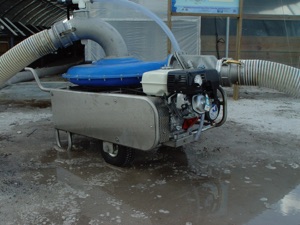
Since then I've modified and used other Neilsens, used similar Magic Valley Heli-Arc. pumps and the Heathro Fish Pump referenced by Leland Lai comment in today's discussion. All of these pumps utilize the open impeller pump head design and all were very efficient at moving shrimp (even Macrobrachium with their very long - 2ft. dangly and fragile appendages) with little to no damage. On the Neilsen and Magic Valley Heli-Arc the trailer mounted pump system had a tower mounted (over the pump and engine platform) bar type fish grader - which we eventually replaced with stainless steel mesh.
When we managed the USCOE project in Texas, we harvested a 134 acre pond and 138,000 pounds of shrimp in 28 hours - first drain board pulled, to last shrimp in the truck - leaving practically no shrimp behind. The pump was used in tandem with V-8 gasoline powered block ice crusher/blowers so that the shrimp (up to 600 lbs./minute - not actually manageable - but 3-400 lbs./minute was) could be iced as they entered the large plastic totes side by side that were shuttled from the pump platform (semi-flat bed trailer) into weighting refrigerator semi-trailers by fork lift. Shrimp came out of one six-inch hose and crushed ice out of another simultaneously. Several semis were used to carry the shrimp to a processing plant. This is only possible if you have all the components in place, have a well-trained crew, and nothing (weather, accidents, mechanicals) interferes - but it is doable and reproducible if you are prepared.
When we designed and managed the University of FL Shrimp Farming Economic Feasibility Demonstration project (http://www.floridaaquaculture.com/publications/Penaeid%20Shrimp%20Report.pdf.),
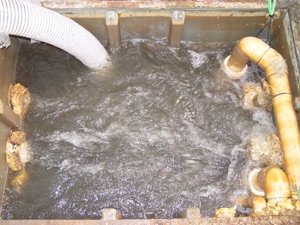
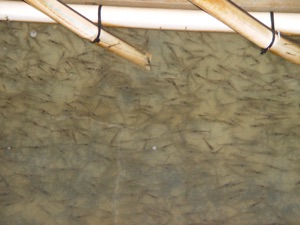
we used the Heathro pump not only to harvest our pond, but as well to transfer our juveniles from our greenhouse nursery to our ponds over distances of several hundred feet with no problem. The Heathro is much smaller and lightweight than earlier harvesters, primes easily, is less expensive and more easily repaired.
Not only does the properly designed and integrated fish pump harvest system have potentially significant impacts on harvested shrimp quality and economics, I believe it also has considerable design and efficiency improvement impacts in shrimp/multi-stage RAS production systems where the shrimp necessarily need to be moved from stage to stage as they grow beyond optimum containment densities - and where in-line three stage gravity flow systems have proven to be production efficiency/economic management disasters.
There are a couple of cautions to open impeller shrimp harvest pump designs and operation that any would be user also need be aware:
1. The open impeller pumps are inherently not self-priming and require an additional priming device that must be well incorporated to the pump design.
2. Your harvest pump intake system must be designed to prevent air from (ever) entering the intake at anytime while shrimp are present - less the pump impeller cavitate - over speed and makes shrimp soup.
I have not used Archimedes type screw pumps because in observing them harvesting on multiple sites, they are not nearly as efficient, not as adaptable to different site specifics, will not handle equally high flow rates, usually have rubber seals on the screw edge that wear out relatively rapidly and then begin to damage shrimp, they have a larger foot print in the harvest area and are generally more fragile and subject to damage in transport on the farm.
Patrick Wood's comment in this same day's Shrimp discussion makes a very good point of the challenges of remote sites and maintaining equipment and schedules - and any manager has to optimize his harvest system with his resources. Compared to other basic pump types on a shrimp farm, I haven't found open impeller type harvest pumps that difficult to maintain if spare parts are adequately planned and inventoried. In addition, maintenance has dramatically improved as designs have evolved.
All things considered and after 40+ years of designing shrimp production and harvest systems, growing and harvesting shrimp in many places, I can tell you that IMO nothing beats the open impeller food pump type shrimp harvester for over all efficiency and its contributions to overall shrimp product quality. If we can help your company with an aquaculture production system design - or just the harvest system, please contact us.