
(placeholder)
(placeholder)
Helgoland Island Harbor - home of the research vessels FS HEINCKE and  FK UTHORN.
Helgoland Island Harbor - home of the research vessels FS HEINCKE and FK UTHORN.
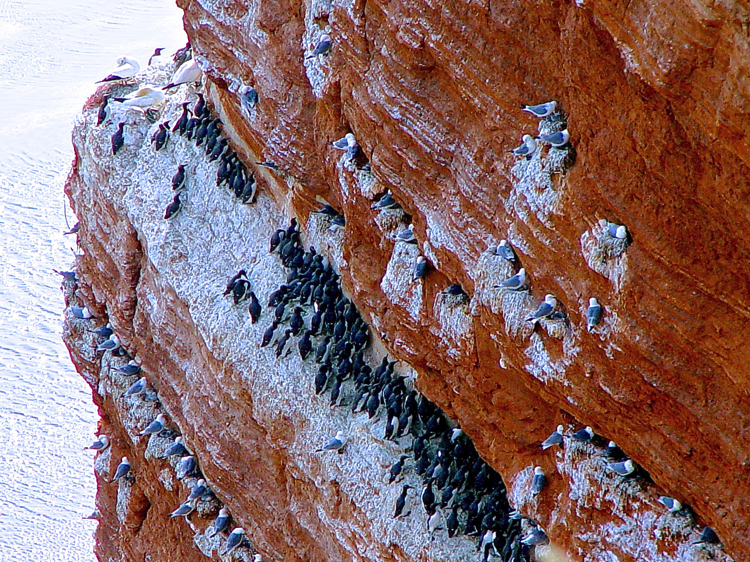
Helgoland Island - oceanic island's bird breeding rocks.
Marine Research Station at Helgoland Island.
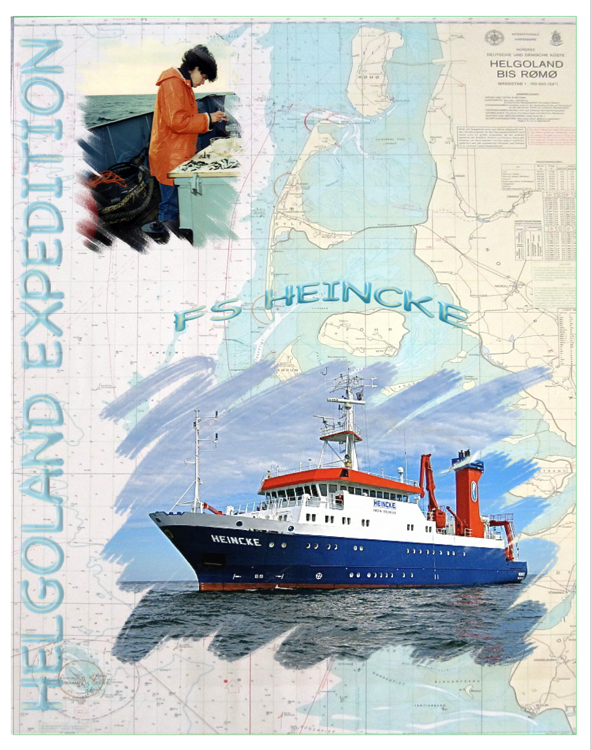
Participation in oceanic research expeditions onboard RV FRIEDRICH HEINCKE.
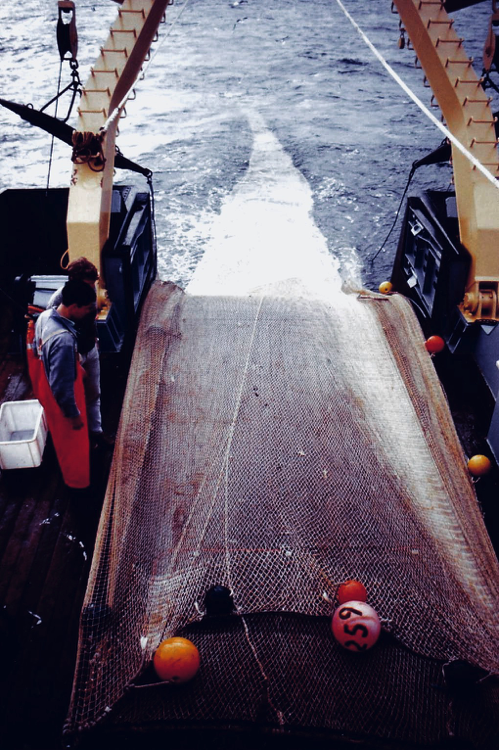
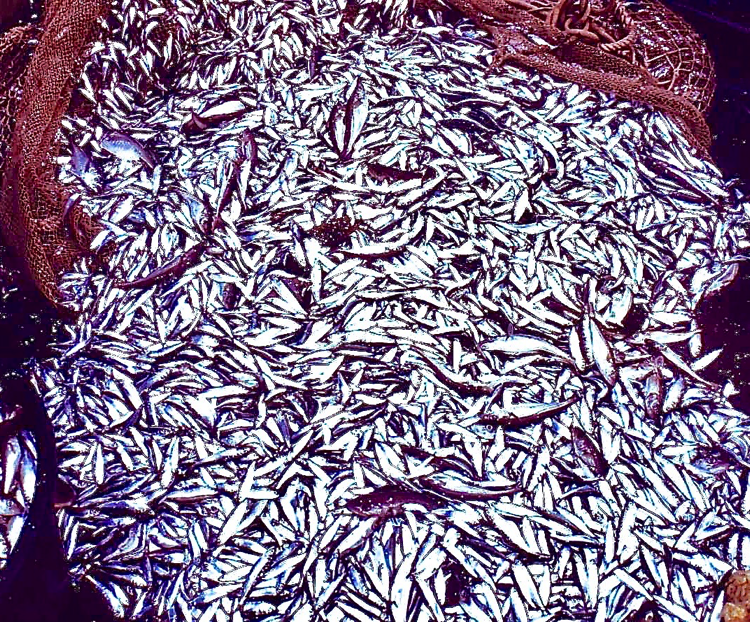
Collection of adult sprat using pelagic trawls.
Pelagic trawl collection of adult sprat.
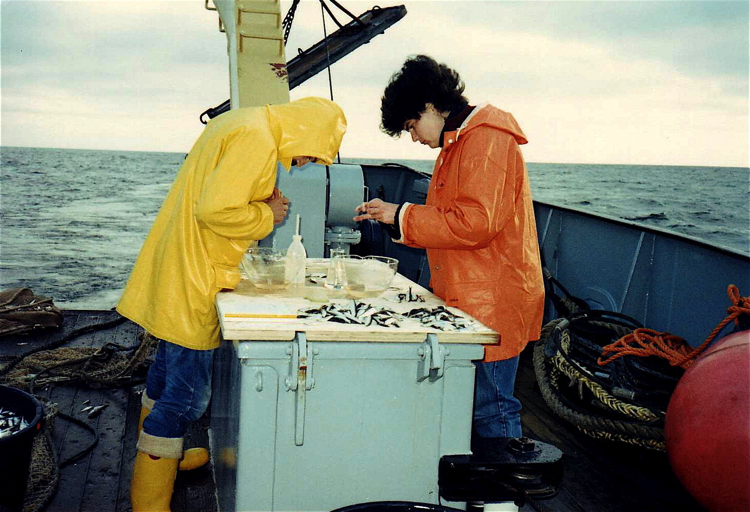
Collection of adult sprat for artificial fertilization (stripping).
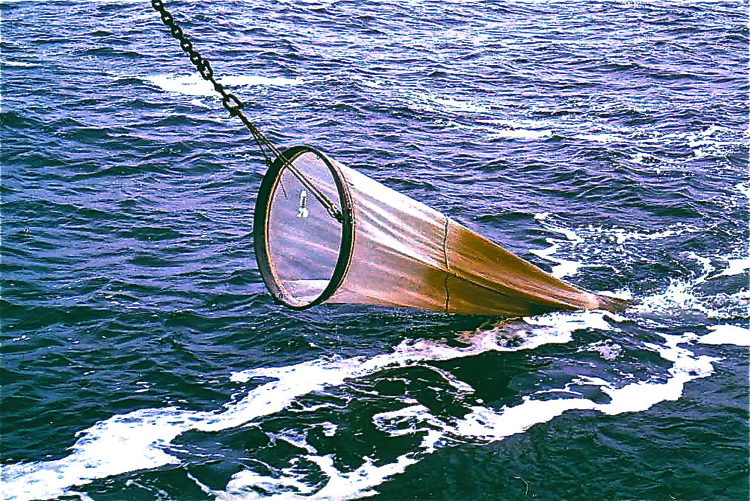
Ring plankton net used for ichthyoplankton research: collection of pelagic fish eggs and fish larvae
Wild collected sprat eggs used for larval growth and otolith increment studies
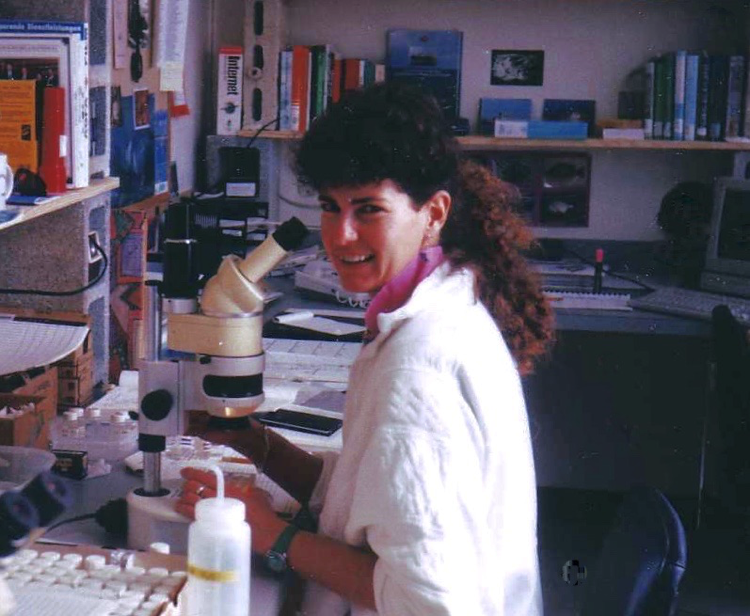
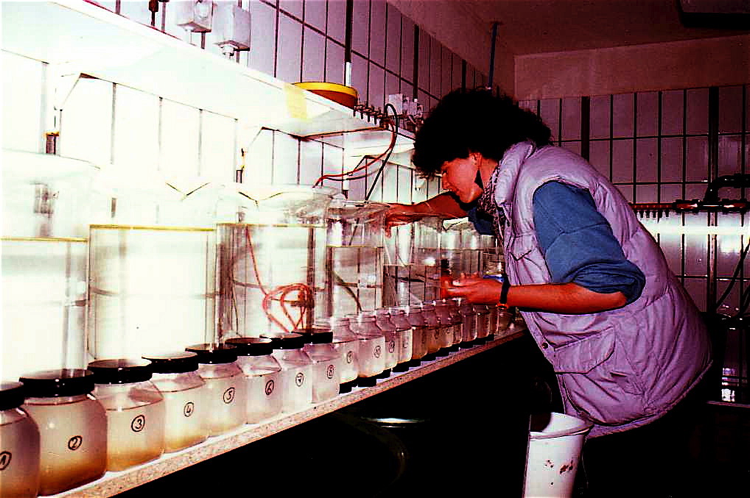
Dr. Alshuth sorting life plankton samples upon return to laboratory.
Fish rearing facility at Marine Research Station Helgoland Island.
Tank maintenance at fish hatching facility - observing larval growth.
Rotifer laboratory - growing food for first-feeding sprat larvae.
Rotifer larval fish food.
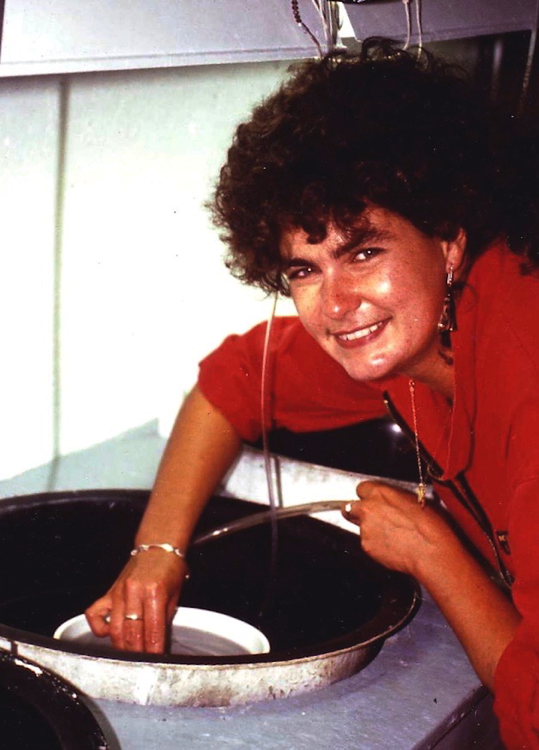
Dr. Alshuth at fish hatch laboratory.
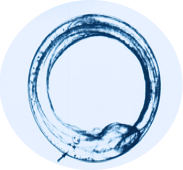
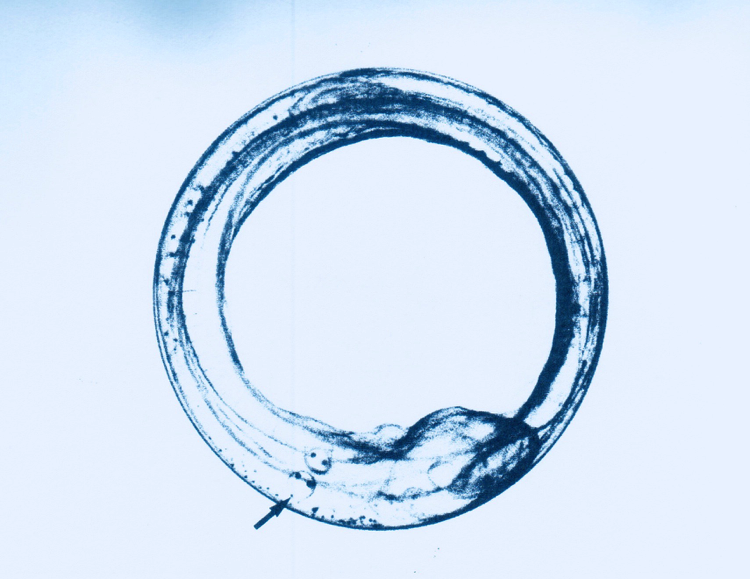
Sprat egg with embryo. The arrow indicates the two pairs of otoliths, each with Sagitta and Lapillus otoliths.
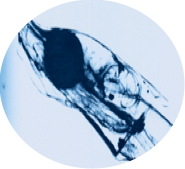
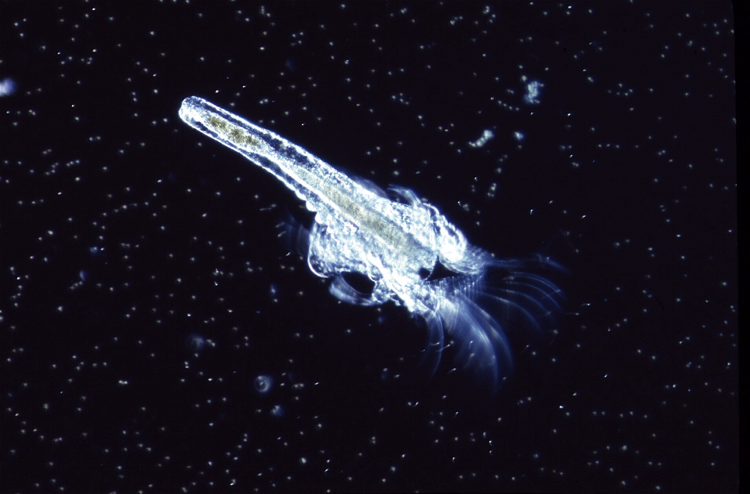
Newly hatched yolk-sac sprat larvae. The arrow indicates the two pairs of otoliths.
Ventral view of a three-day old sprat larvae - with pigmented eyes and mouth breaking through. Two ototlith pairs (Sagitta & Lapiius) are visible.
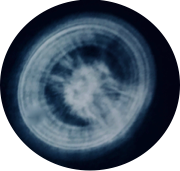
Sagitta otolith of a 18-day old laboratory-reared sprat larva. 12 increments are visible (1,000x magnification w/phase contrast)
29-day old sprat larva. TL 13.8 mm.
Sagittal otoliths of lab-reared sprat larvae. 11-day old on top with five rings, bottom sagitta of 17-day old larvae with 11 rings.
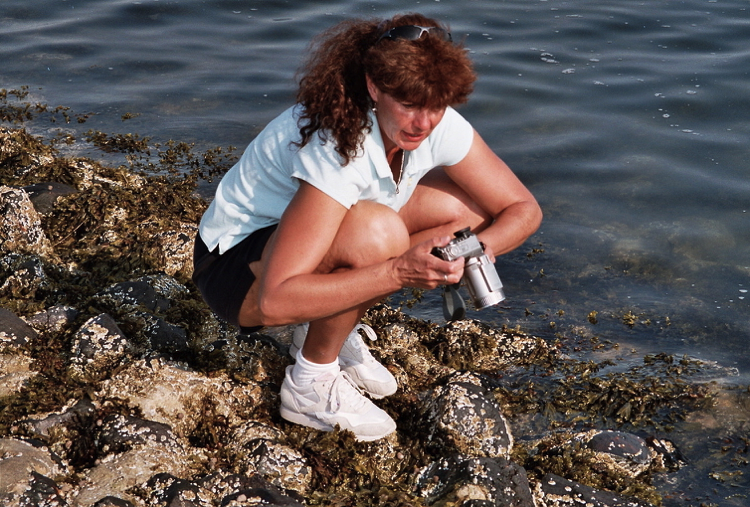
Dr. Alshuth studying rocky intertidal community.
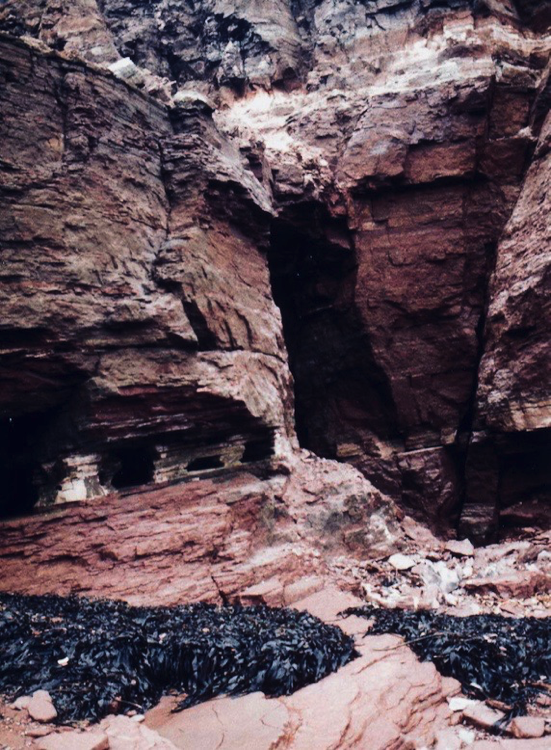
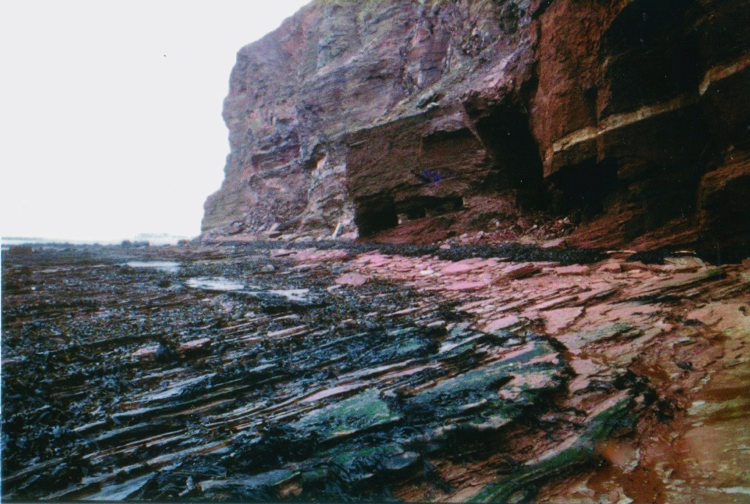
Helgoland Island's rocky intertidal.
Rocky intertidal Laminaria flat at low tide.

Can understanding the biotic and abiotic parameters that affect fish recruitment explain and predict population fluctuations and shifts in community structure - useful for resource management?

DOCTORAL RESEARCH: Bio-physical Oceanography at Helgoland Island (Germany) in collaboration with the Alfred Wegener Institute of Polar and Marine Research, Bremerhaven (Germany).


RESEARCH STUDIES:

• Reproduction Biology of the sprat, Sprattus sprattus, in the North Sea Project. Funded by the DFG (Deutsche Forschungs Gemeinschaft) as part of the IRP (International Recruitment Project).

• Growth, nutrition and larviculture experiments of the clupeoid Sprattus sprattus. Ageing of marine larval fish, juvenile and adult stages, using otolith increment techniques.

• Microstructure of embryonic and larval stage otoliths revealing daily growth patterns.

• Participation in oceanic research expeditions with RV UTHÖRN as Chief Scientist; management of field operations, capturing adult, juvenile and planktonic stages (eggs & larvae) of sprat.

•  Larval transport, distribution and abundance of larval and juvenile sprat associated with various oceanographic processes (physical & chemical oceanography).

• Participation in oceanic research expeditions with RV FRIEDRICH HEINCKE.

• Collection of adult sprat using pelagic trawls - for artificial fertilization (stripping) of sprat (Sprattus sprattus).

Publications related to this research include:

Alshuth, S. 1994.  Plankton: Wonder world in a drop of water. (German – Text and Photography).  Sylt Magazin 1994, 76-78.


Alshuth, S. 1990.  Fish farming - Aquaculture research at Helgoland (German – Text and Photography).  Sylt Magazin 1990, 60-61.


Alshuth, S. 1991.  Sparkling marine phosphorescence.  Bioluminescence of marine dinoflagellates. (German – Text and Photography). Mikrokosmos 80 (12), 372-375.


Alshuth, S., Ebeling, E. 1989.  A survey of the diet and diseases of Gadus morhua L. around Helgoland in the German Bight. ICES C.M. 1989/G:49, Dem. Fish Cttee. Ref. Mar. Envir. Qual. Cttee., 10 pp.


Ebeling, E., Alshuth, S. 1989.  Food preferences and diseases of Myoxocephalus scorpius in the German Bight. ICES C.M. 1989/G:48, Dem. Fish Cttee. Ref. Mar. Envir. Qual. Cttee., 6 pp.


Alshuth, S. 1989.  Daily growth increments on otoliths of juvenile fishes (German – Text and Photography). Mikrokosmos 78 (5), 134-138.


Alshuth, S. 1988.  Rearing of marine fish larvae with special consideration of the sprat (Sprattus sprattus). Workshop Zoo am Meer, Bremerhaven, 30.Sept. - 02.Oct. 1988.


Click on any picture below to start slide show.

HELGOLAND ISLAND

MARINE RESEARCH LABORATORY